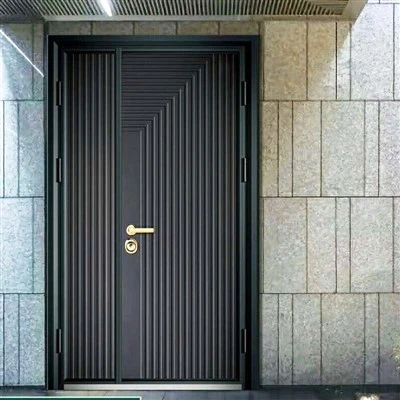
Are home explosion proof cast board doors suitable for earthquake - prone areas?
As a supplier of Home Explosion Proof Cast Board Doors, I've often been asked whether these doors are a good fit for earthquake - prone areas. This is a critical question that requires a comprehensive analysis from various aspects, including the structural design of the doors, the unique challenges presented by earthquakes, and the safety requirements of residents in those regions.
I. Structural Characteristics of Home Explosion Proof Cast Board Doors
Home explosion proof cast board doors are engineered to withstand high - intensity explosions. They are typically constructed with thick, high - strength cast boards that provide excellent resistance to blast forces. The cores of these doors often consist of materials with strong shock - absorbing capabilities, such as reinforced concrete, steel foams, or composite materials. These internal components are crucial for dispersing and reducing the impact energy generated by an explosion.
In addition to the core materials, the frame of the explosion proof cast board door is also a key part of its design. Usually made of heavy - duty steel or other high - strength alloys, the frame is firmly attached to the building structure. This enhances the overall stability of the door and ensures that it can remain in place during an explosion.
II. Challenges Presented by Earthquakes in Earthquake - Prone Areas
Earthquakes bring a series of unique challenges to building structures. The ground shaking during an earthquake can cause the building to sway, tilt, or even collapse. Different types of earthquakes produce different frequencies and amplitudes of ground motion. For example, shallow earthquakes often generate high - frequency vibrations that can cause significant damage to the superstructure of a building, while deep - seated earthquakes may result in long - period oscillations that affect the building's foundation.
Moreover, aftershocks can be as destructive as the main earthquake itself. They may occur hours, days, or even weeks after the initial event, further weakening the building structure that has already been damaged. In earthquake - prone areas, buildings are also at risk of secondary hazards such as landslides, tsunamis (if located near the coast), and fires caused by damaged gas pipelines or electrical systems.
III. Suitability of Home Explosion Proof Cast Board Doors in Earthquake - Prone Areas
1. Advantages
- Robustness: The high - strength materials used in explosion proof cast board doors give them a certain degree of resistance to the mechanical forces generated by earthquakes. The thick cast boards and strong frames can withstand a certain level of lateral displacement and shaking, which helps to prevent the door from being easily damaged or detached from the building during an earthquake.
- Shock Absorption: Some of the shock - absorbing materials in the door core can also play a role in reducing the impact of earthquake vibrations. They can dissipate the energy of the seismic waves, similar to how they absorb the energy of an explosion. This property can contribute to protecting the integrity of the door and the safety of the interior space.
- Safety for Blasting in the Aftermath: In earthquake - prone areas, there may be situations where blasting is required for rescue or reconstruction work. The explosion - proof function of these doors can provide an extra layer of safety during such operations, protecting the occupants from potential blast damage.
2. Disadvantages
- Weight: Explosion proof cast board doors are generally heavy due to the use of thick and dense materials. In an earthquake, the extra weight can put additional stress on the building's door frame and the surrounding structure. This may increase the risk of structural failure, especially if the building's structure is not designed to handle such heavy loads during seismic events.
- Lack of Flexibility: These doors are designed for explosion resistance, with a rigid structure that may lack the flexibility needed to adapt to the large - scale deformations caused by earthquakes. During an earthquake, buildings may undergo significant elastic or plastic deformations. A rigid door may not be able to accommodate these changes, leading to jamming, misalignment, or even damage to the door structure.
- Cost - Benefit Considerations: Installing explosion proof cast board doors can be more expensive than traditional doors. In earthquake - prone areas where the primary threat is earthquakes rather than explosions, the high cost of these doors may not be justifiable from a cost - benefit perspective, especially when there are other earthquake - resistant door options available at a lower cost.
IV. Mitigation Measures and Considerations
1. Structural Adaptation
If the decision is made to install home explosion proof cast board doors in earthquake - prone areas, it is essential to ensure that the building structure is reinforced to support the additional weight of the doors. This may involve strengthening the door frame, the surrounding walls, and the building's foundation. Professional structural engineers should be consulted to carry out detailed calculations and design appropriate reinforcement measures.
2. Flexibility Enhancement
To improve the flexibility of the explosion proof cast board doors, some design modifications can be made. For example, flexible joints or shock - absorbing mechanisms can be added to the door frame or the connection between the door and the building structure. These features can help the door better adapt to the deformations caused by earthquakes.
3. Comprehensive Safety Strategy
In addition to the characteristics of the door itself, a comprehensive safety strategy should be developed for the building. This includes installing other earthquake - resistant features such as flexible partitions, seismic isolation devices, and proper emergency evacuation routes. The use of home explosion proof cast board doors should be considered as part of a broader safety plan, rather than a standalone solution.


V. Alternative Products and Their Links
For customers in earthquake - prone areas who are concerned about the drawbacks of home explosion proof cast board doors, we also offer some alternative products. Our Sun Proof Cast Copper Board Safety Door is designed with a more lightweight yet strong structure, which may be a better option for buildings in seismic regions. It combines sun - proof features with a certain level of safety performance.
Another option is the Anti Gun Aluminum Cast Exterior Door. Made of aluminum cast material, it offers a relatively lower weight and good resistance to impact, which can be beneficial during earthquakes.
Meanwhile, our Double Size Security Explosion Proof Door is an especially large - sized option that provides enhanced security. It can be customized to some extent to better meet the specific needs of earthquake - resistant building design.
VI. Encouraging Contact for Purchase and Negotiation
In conclusion, while home explosion proof cast board doors have both advantages and disadvantages in earthquake - prone areas, careful consideration and proper design can make them a viable option. Whether you are interested in home explosion proof cast board doors or our alternative products, I encourage you to contact us to discuss your specific requirements. We can provide detailed product information, customized solutions, and professional advice to ensure that you make the best choice for your building's safety needs.
References
- Building Seismic Safety Council. (2009). NEHRP Recommended Provisions for Seismic Regulations for New Buildings and Other Structures.
- Federal Emergency Management Agency. (2018). Earthquake - Resistant Design Concepts.
- Smith, J. D. (2015). Structural Response to Earthquake Loading. Cambridge University Press.