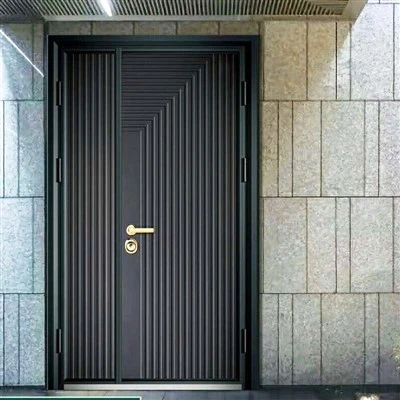
Do compound yard aluminum courtyard doors have a good heat - insulation performance?
As a supplier of Compound Yard Aluminum Courtyard Doors, I am frequently asked about the heat - insulation performance of these doors. It's a crucial question, especially as customers become more environmentally conscious and energy - efficient in their homes and yards. In this blog post, I will delve into the science behind the heat - insulation capabilities of compound yard aluminum courtyard doors and provide you with a comprehensive analysis.
The Basics of Heat Transfer
Before discussing the heat - insulation performance of compound yard aluminum courtyard doors, it's essential to understand the three main methods of heat transfer: conduction, convection, and radiation.
Conduction is the transfer of heat through a solid material. Metals, like aluminum, are generally good conductors of heat. This means that in a traditional aluminum door, heat would pass through easily from one side to the other. However, in a compound yard aluminum courtyard door, there are unique features that mitigate this conduction.
Convection involves the transfer of heat through the movement of fluids (liquids or gases). When there are air gaps or poorly sealed areas in a door, air can move, carrying heat in the process.
Radiation is the transfer of heat in the form of electromagnetic waves. The sun's rays can radiate heat directly through the door, increasing the indoor temperature.
How Compound Yard Aluminum Courtyard Doors Combat Heat Transfer
1. Insulating Materials
Our compound yard aluminum courtyard doors are designed with insulating materials integrated into the structure. These materials are often made of foam or other low - conductivity substances. The insulating core acts as a barrier to conduction, preventing the easy transfer of heat through the aluminum frame. Foam insulation, for example, has a low thermal conductivity coefficient, which means it resists the flow of heat. This helps to keep the interior of the yard or home cooler in the summer and warmer in the winter.


2. Multiple Chambers
Many of our compound yard aluminum courtyard doors feature multiple chambers within the frame. These chambers create air pockets that act as natural insulators. Air is a poor conductor of heat, so by trapping air within the door's structure, we reduce the conduction of heat through the door. The multiple chambers also disrupt the convection process. Since the air is confined within these small spaces, it cannot circulate freely and carry heat across the door.
3. Energy - Efficient Glass
In addition to the frame insulation, our doors often come with energy - efficient glass. This type of glass is designed to block a significant portion of the sun's radiant heat. It has a special coating that reflects infrared radiation, which is the main component of the sun's heat. By reflecting this radiation, the glass prevents it from entering the yard or home, reducing the need for excessive air - conditioning during the hot summer months.
Real - World Performance
To understand the practical heat - insulation performance of our compound yard aluminum courtyard doors, let's consider a few real - world scenarios.
In the summer, a well - insulated compound yard aluminum courtyard door can significantly reduce the amount of heat that enters the yard or home. By blocking both conductive and radiant heat, the indoor temperature can stay more comfortable, reducing the reliance on air - conditioning systems. This not only saves energy but also lowers utility bills.
In the winter, the insulation properties of these doors prevent the warm air inside from escaping. The trapped air in the multiple chambers and the insulating core help to maintain a stable indoor temperature, making the home more energy - efficient and reducing heating costs.
Comparing with Other Courtyard Door Options
When compared to other types of courtyard doors, such as wooden or steel doors, compound yard aluminum courtyard doors offer several advantages in terms of heat insulation.
Wooden Doors: While wood is a natural insulator, it is susceptible to moisture damage, which can degrade its insulation properties over time. Additionally, wooden doors may require regular maintenance to keep their insulation intact. In contrast, our aluminum courtyard doors are resistant to moisture and require minimal maintenance, making them a more reliable long - term insulation solution.
Steel Doors: Steel is an excellent conductor of heat, which means that steel doors can transfer a significant amount of heat. Our compound yard aluminum courtyard doors, with their insulating materials and design features, offer much better heat - insulation performance than traditional steel doors.
Our Product Range
We offer a variety of compound yard aluminum courtyard doors to meet different customer needs. Some of our popular products include:
- Park Car Aluminum Courtyard Door: This door is designed with a modern and stylish look, while still providing excellent heat - insulation performance. Its unique design features contribute to its energy - efficiency.
- Full Panel Type Aluminum Courtyard Door: The full - panel design of this door not only gives a sense of solidity but also enhances its heat - insulation capabilities. The large panel area allows for better integration of insulating materials.
- Aluminum Art Gate for Courtyard: This gate combines aesthetics with practicality. It has a heat - insulation design that ensures the yard remains comfortable while adding an artistic touch to the outdoor space.
Conclusion
In conclusion, compound yard aluminum courtyard doors have excellent heat - insulation performance. Through the use of insulating materials, multiple chambers, and energy - efficient glass, these doors effectively combat heat transfer through conduction, convection, and radiation. They offer a reliable and energy - efficient solution for both summer and winter, helping customers save on energy costs and create a more comfortable living environment.
If you are interested in our compound yard aluminum courtyard doors and want to discuss your specific needs, I invite you to contact us for a procurement consultation. We are committed to providing high - quality products and excellent service to help you achieve the best insulation and aesthetic results for your yard or home.
References
- ASHRAE (American Society of Heating, Refrigerating and Air - Conditioning Engineers). Handbook of Fundamentals.
- Van Geem, Kevin M., et al. "Thermal insulation materials and systems for buildings." Energy and Buildings 149 (2017): 78 - 97.
- Zmeureanu, R., and R. Krarti. "Thermal performance of building envelopes: state - of - the - art." Building and Environment 40.11 (2005): 1495 - 1513.