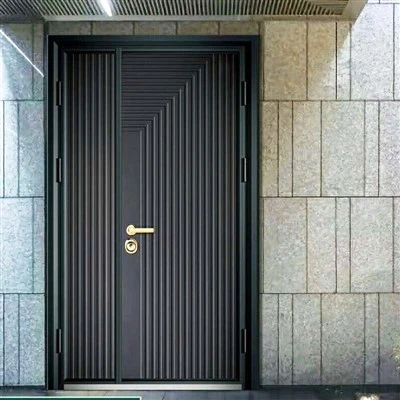
When it comes to securing a property, the choice of door material is crucial. Two popular options for high - security doors are security steel alloy copper metal doors and wrought iron doors. As a supplier of security steel alloy copper metal doors, I am well - positioned to provide a detailed comparison between these two types of doors in terms of security.
1. Material Strength
Security steel alloy copper metal doors are made by combining steel, alloy, and copper. Steel is renowned for its high tensile strength, which means it can withstand a significant amount of force without deforming. Alloys are often added to enhance the steel's properties, such as corrosion resistance and hardness. Copper, on the other hand, not only adds an aesthetic appeal but also contributes to the overall strength and durability of the door. For instance, a Single Size Big Frame Steel Copper Door is built with a robust steel frame that can resist impact from tools like crowbars and hammers.
Wrought iron, in contrast, has been a traditional choice for doors due to its strength. However, compared to modern steel alloys, wrought iron is relatively less flexible and has a lower resistance to sudden impacts. Wrought iron doors are more likely to bend or crack under high - pressure situations, which can compromise the security of the property.
2. Locking Mechanisms
The locking system is a critical component of any security door. Security steel alloy copper metal doors can be equipped with the latest and most advanced locking mechanisms. These doors often come with multi - point locking systems, which means the door is secured at multiple points along the frame. This makes it extremely difficult for intruders to force the door open. For example, a with Decorative Window Exterior Steel Copper door can be fitted with high - security deadbolts and electronic locks, providing an extra layer of protection.
Wrought iron doors, while they can also be fitted with locks, may not be as compatible with the most advanced locking technologies. The design of wrought iron doors may limit the installation of some high - tech locking systems, and the traditional locks used on these doors may be more vulnerable to picking or bumping.
3. Resistance to Forced Entry
In terms of forced entry, security steel alloy copper metal doors have a clear advantage. The combination of strong materials and advanced locking systems makes them highly resistant to forced entry attempts. Thieves typically look for the path of least resistance, and a well - made steel alloy copper metal door is not an easy target.
Wrought iron doors, although strong, are more easily penetrated by determined intruders. Since they are more brittle than steel alloys, an intruder with the right tools can break through a wrought iron door more quickly. Additionally, the open - work designs that are common in wrought iron doors may provide handholds for intruders to attempt to pry the door open.
4. Weather Resistance and Security Maintenance
Security steel alloy copper metal doors are designed to withstand various weather conditions. The alloy elements in the door help prevent corrosion, which is important for maintaining the structural integrity of the door over time. A door that is corroded or weakened by the elements is more vulnerable to security breaches. For example, a Elegant Doorhead Steel Copper Door can be treated with special coatings to enhance its weather resistance.
Wrought iron doors, however, are prone to rusting if not properly maintained. Rust can weaken the iron over time, reducing its strength and making the door more susceptible to forced entry. Regular maintenance, such as painting and rust - proofing, is required to keep a wrought iron door in good security condition.


5. Burglary Statistics and Perception
Statistics show that properties with high - security doors are less likely to be targeted by burglars. Security steel alloy copper metal doors, with their reputation for strength and advanced security features, act as a strong deterrent. The perception of a property with a steel alloy copper metal door is that it is well - protected, which makes it a less attractive target for thieves.
Wrought iron doors, while they have a certain aesthetic appeal, may not convey the same level of security to potential burglars. The traditional look of wrought iron may give the impression that the door is more for decoration than for strong security.
6. Fire Resistance
In addition to burglary protection, fire resistance is also an important aspect of door security. Security steel alloy copper metal doors can be engineered to have a high level of fire resistance. The steel and alloy components can withstand high temperatures for a longer period, providing more time for occupants to evacuate in case of a fire.
Wrought iron doors, although they can withstand some heat, do not have the same level of fire - resistant properties as steel alloy copper metal doors. The iron can expand and warp under high temperatures, which may compromise the integrity of the door and allow the fire to spread more quickly.
As a supplier of security steel alloy copper metal doors, I understand the importance of providing customers with products that offer the highest level of security. Our doors are designed not only to protect your property but also to add an elegant touch to your home or business. If you are in the market for a high - security door, I invite you to contact us to discuss your specific needs and how our security steel alloy copper metal doors can meet them. We are committed to providing you with the best products and services to ensure your peace of mind.
References
- "Building Security: Principles and Practices", by Charles D. Abbey.
- "Handbook of Fire Protection Engineering", edited by Douglas A. Madrzykowski and John R. Hall Jr.