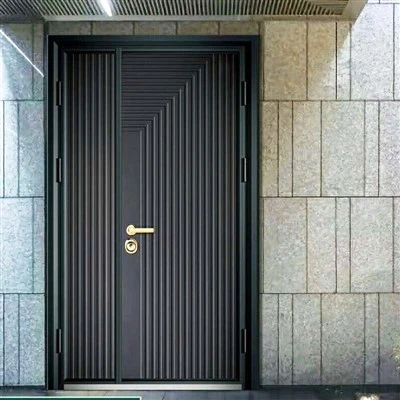
As a reputable supplier of Exterior Security Metal Copper Glass Doors, I often get asked about the corrosion resistance of our products. Corrosion is a significant concern for exterior doors, as it can compromise both the aesthetic appeal and structural integrity of the door over time. In this blog, I'll delve into the technical details and innovative strategies that make our Exterior Security Metal Copper Glass Doors highly resistant to corrosion.
Understanding the Corrosion Process
Before we discuss how our doors resist corrosion, it's essential to understand the corrosion mechanism. Corrosion is an electrochemical process that occurs when a metal reacts with its environment. In the case of metal doors, especially those exposed to the elements, moisture, oxygen, and various pollutants in the air can initiate and accelerate corrosion.
For copper, which is a key component in our doors, it forms a natural protective patina over time. When copper is exposed to oxygen in the air, it undergoes an oxidation reaction to form copper oxide, which then further reacts with carbon dioxide and moisture to form basic copper carbonate, commonly known as verdigris. This patina layer is not only aesthetically pleasing but also serves as a protective barrier, preventing further corrosion of the underlying copper.
Material Selection and Alloying
One of the primary ways our Exterior Security Metal Copper Glass Doors resist corrosion is through careful material selection. We use high - quality copper alloys that are specifically formulated to enhance corrosion resistance. These alloys often contain elements such as nickel, tin, and aluminum, which can improve the metal's passivity and form a more stable protective film.
For example, some of our copper alloys with nickel can form a thin and tenacious oxide layer on the surface. This layer acts as a barrier, reducing the rate of corrosion by preventing the penetration of oxygen and moisture into the metal. Additionally, the presence of tin can enhance the mechanical properties of the alloy while also contributing to its corrosion - resistant characteristics.
Surface Treatments
Surface treatments play a crucial role in enhancing the corrosion resistance of our doors. We employ several advanced surface treatment techniques to protect the metal and glass components.
Galvanization and Anodization
Galvanization is a common process for protecting steel components in our doors. By applying a layer of zinc to the steel surface, a sacrificial anode is created. When corrosion occurs, the zinc corrodes first, protecting the underlying steel. This process significantly extends the lifespan of the steel parts of the door.
Anodization is often used on aluminum components. During anodization, a controlled oxide layer is formed on the aluminum surface. This oxide layer is hard, durable, and highly resistant to corrosion. It also provides a base for further surface finishes, such as painting or powder coating.
Painting and Powder Coating
We offer a variety of high - quality paint and powder coating options for our doors. These coatings not only add aesthetic value but also act as a physical barrier between the metal and the environment. The paints and powder coatings we use are formulated to be weather - resistant, UV - stable, and resistant to chemicals and pollutants.
Before applying the coating, the metal surface is carefully prepared to ensure maximum adhesion. This typically involves cleaning, degreasing, and sometimes etching the surface. The coating is then applied in multiple layers to provide a thick and uniform protective film.
Design Considerations for Corrosion Resistance
The design of our Exterior Security Metal Copper Glass Doors is also optimized to resist corrosion.
Drainage and Ventilation
Proper drainage and ventilation are essential to prevent the accumulation of moisture on the door surface. Our doors are designed with built - in drainage channels that allow water to flow away quickly, reducing the time the metal is in contact with moisture. Ventilation holes are also incorporated in strategic locations to promote air circulation, which helps to keep the door dry.
Sealing and Gaskets
High - quality seals and gaskets are used to prevent water and air infiltration. These seals are made from materials that are resistant to weathering and aging, such as EPDM rubber. They create a tight seal around the door frame and glass, protecting the internal components from moisture and pollutants.
Maintenance Tips for Corrosion Prevention
While our Exterior Security Metal Copper Glass Doors are designed to be highly corrosion - resistant, proper maintenance can further extend their lifespan.
Regular Cleaning
Regular cleaning is essential to remove dirt, dust, and pollutants from the door surface. Use a mild detergent and a soft cloth to clean the door. Avoid using abrasive cleaners or tools that can scratch the surface, as scratches can compromise the protective coating.
Inspection and Repair
Periodically inspect the door for any signs of damage or corrosion. Check the seals, gaskets, and coatings for any cracks, peeling, or other defects. If any issues are found, they should be repaired promptly to prevent further corrosion.
Our Product Range
We offer a wide range of Exterior Security Metal Copper Glass Doors to meet different customer needs. For example, our Brown Color Entry Steel Copper Door combines the elegance of copper with the durability of steel. The brown color finish adds a touch of sophistication to any exterior.


Our Villa Double Steel Cooper Door with Doorhead is designed for larger entrances, providing enhanced security and a grand appearance. The doorhead adds an extra architectural element, making it a focal point of the facade.
If you're looking for a more decorative option, our Window Bronze Peacock Security Glass Door features intricate peacock designs on the glass, combined with a bronze - hued metal frame. The glass is also designed for security and energy efficiency.
Conclusion
Our Exterior Security Metal Copper Glass Doors are engineered to resist corrosion through a combination of material selection, surface treatments, design considerations, and proper maintenance. By understanding the corrosion process and implementing these strategies, we ensure that our doors provide long - lasting performance and aesthetic appeal.
If you're interested in purchasing our Exterior Security Metal Copper Glass Doors or have any questions about our products, feel free to reach out to us for a detailed discussion. We look forward to working with you to find the perfect door solution for your property.
References
- Fontana, Marcel G. "Corrosion Engineering." McGraw - Hill, 1986.
- Uhlig, H. H., & Revie, R. W. "Corrosion and Corrosion Control: An Introduction to Corrosion Science and Engineering." Wiley, 1985.