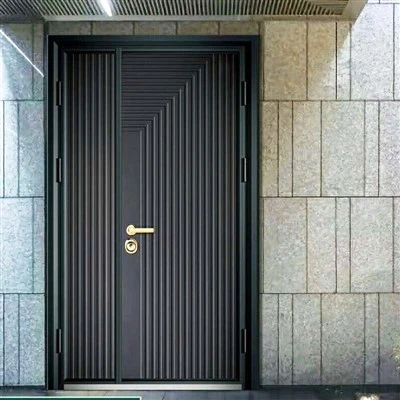
The history of arch top main entrance wrought iron doors is a rich tapestry woven through centuries, reflecting the evolution of architecture, craftsmanship, and cultural values. As a supplier of arch top main entrance wrought iron doors, I have had the privilege of delving deep into this history, and I am excited to share it with you.
Origins in Ancient Times
The use of iron in door - making can be traced back to ancient civilizations. In ancient Egypt, iron was a precious metal, and although its use was limited, the concept of using metal for architectural elements was beginning to take shape. The Egyptians were known for their elaborate entrances, and the idea of creating a strong and decorative door to mark an important threshold was born.
In ancient Rome, ironwork reached new heights. Roman blacksmiths were highly skilled, and they used wrought iron to create gates and doors for public buildings, villas, and temples. The arch, a signature feature of Roman architecture, was often incorporated into these iron structures. The arches in Roman iron doors were not only aesthetically pleasing but also provided structural support. These early arch top wrought iron doors were symbols of status and power, as the ability to afford such elaborate metalwork was a sign of wealth.
Medieval Europe: A Time of Fortification and Ornamentation
During the Middle Ages, the need for security became paramount. Castles and fortified cities across Europe were built with thick walls and heavy gates. Wrought iron doors, with their strength and durability, were a natural choice for main entrances. The arch top design was popular as it complemented the Gothic architecture that was prevalent during this period.
Medieval blacksmiths were master craftsmen. They would spend hours forging and shaping the iron, creating intricate patterns and designs. These designs often had symbolic meanings. For example, the use of crosses and religious symbols was common, reflecting the strong influence of the Church during this time. The iron doors were not only a means of protection but also a way to express religious devotion and cultural identity.
The Renaissance: A Revival of Art and Craftsmanship
The Renaissance was a period of great cultural and artistic revival in Europe. Architects and artists looked back to the classical styles of ancient Greece and Rome for inspiration. In the realm of wrought iron door - making, this meant a return to more refined and elegant designs.
Arch top main entrance wrought iron doors became more ornate during the Renaissance. Blacksmiths began to incorporate elements such as scrolls, floral motifs, and human figures into their designs. These doors were often commissioned by wealthy merchants, nobles, and the clergy. They were seen as works of art, and the level of craftsmanship was extremely high. The iron doors were also used to enhance the grandeur of palaces, churches, and public buildings.
Industrial Revolution: Mass Production and Changing Design Trends
The Industrial Revolution brought about significant changes in the production of wrought iron doors. With the invention of new manufacturing techniques, such as the rolling mill and the steam hammer, it became possible to produce iron on a larger scale. This led to a decrease in the cost of wrought iron, making it more accessible to a wider range of people.


However, the quality of craftsmanship suffered to some extent. Mass - produced arch top main entrance wrought iron doors often lacked the intricate details of their hand - forged predecessors. The designs became more standardized, and the focus shifted from artisanal work to efficiency. Despite this, the arch top design remained popular, as it was still associated with elegance and tradition.
Modern Era: A Blend of Tradition and Innovation
In the modern era, arch top main entrance wrought iron doors have experienced a resurgence in popularity. Homeowners and architects are once again drawn to the timeless beauty and durability of these doors. Today's wrought iron doors combine traditional design elements with modern technology and materials.
For example, many modern arch top wrought iron doors are now equipped with advanced locking systems for enhanced security. The use of glass panels has also become common, allowing for more natural light to enter the building while still maintaining the aesthetic appeal of the ironwork.
At our company, we take pride in offering a wide range of arch top main entrance wrought iron doors. Our doors are crafted with the highest level of precision and attention to detail. Whether you are looking for a Quality Wrought Metal Door with Lock, a with Transom Entry Main Wrought Iron Door, or an Entrance Door With Sidelights, we have the perfect solution for you.
Conclusion
The history of arch top main entrance wrought iron doors is a testament to the enduring appeal of this architectural element. From the ancient civilizations of Egypt and Rome to the modern homes of today, these doors have played a significant role in shaping the way we enter and experience buildings.
As a supplier, we are committed to carrying on the tradition of craftsmanship and quality. Our doors are not just functional; they are works of art that can enhance the beauty and value of any property. If you are interested in purchasing an arch top main entrance wrought iron door for your home or building, we invite you to contact us for a detailed discussion about your specific needs and preferences. We look forward to working with you to create the perfect entrance for your space.
References
- Ackerman, James S. "The Architecture of the Renaissance in Italy." Penguin Books, 1986.
- Blum, Jonathan M. "Ironwork in America: A History." W. W. Norton & Company, 2010.
- Pevsner, Nikolaus. "An Outline of European Architecture." Penguin Books, 1963.