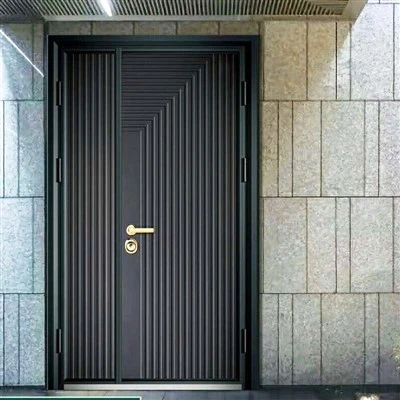
As a supplier of Square Top Wrought Iron Doors with Transom, I often receive inquiries about the insulation value of these elegant and sturdy doors. In this blog post, I'll delve into the factors that contribute to the insulation of such doors, compare them with other types of doors, and explain why understanding insulation value is crucial for homeowners and building contractors alike.
Understanding Insulation Value
Insulation value is typically measured in terms of R - value, which stands for thermal resistance. The higher the R - value, the better the material is at resisting heat transfer. Heat transfer occurs through three main mechanisms: conduction, convection, and radiation. In the context of doors, we are primarily concerned with conduction, where heat moves through the material of the door itself.
Factors Affecting the Insulation of Square Top Wrought Iron Doors with Transom
Material Composition
Wrought iron is a dense and heavy material. On its own, wrought iron has a relatively low R - value compared to some other insulation materials. However, the insulation of a Square Top Wrought Iron Door with Transom is not solely determined by the iron. Many modern versions of these doors are designed with additional insulation features. For example, the transom part may have insulated glass. Insulated glass consists of multiple panes of glass separated by a gas - filled space, usually argon or krypton. These gases are poor conductors of heat, which significantly reduces heat transfer through the glass.
Sealing and Weatherstripping
Proper sealing is essential for any door to achieve good insulation. Square Top Wrought Iron Doors with Transom are often equipped with high - quality weatherstripping. Weatherstripping helps to prevent air leakage around the edges of the door and the transom. When air cannot leak in or out, it reduces the amount of heat that can be lost or gained through convection. A well - sealed door can maintain a more stable indoor temperature, leading to energy savings.
Design and Construction
The design of the door also plays a role in its insulation value. A well - constructed Square Top Wrought Iron Door with Transom will have a solid frame that fits tightly against the door jamb. The joints and connections should be well - sealed to prevent heat transfer. Additionally, some doors may have internal insulation layers or foam filling in the iron sections, which can further improve their thermal performance.
Comparing with Other Types of Doors
Wood Doors
Wood is a natural insulator and generally has a higher R - value than wrought iron on its own. However, wood doors are more prone to warping, cracking, and rotting over time, which can compromise their insulation. Square Top Wrought Iron Doors with Transom, on the other hand, are more durable and less likely to suffer from these issues. With proper insulation enhancements, they can offer comparable or even better long - term insulation performance.
Fiberglass Doors
Fiberglass doors are known for their excellent insulation properties. They can have high R - values and are also very energy - efficient. However, they may lack the aesthetic appeal and the classic look of wrought iron. Square Top Wrought Iron Doors with Transom provide a unique combination of style and functionality. They can add a touch of elegance to any property while still offering reasonable insulation.
Benefits of Good Insulation in Square Top Wrought Iron Doors with Transom
Energy Efficiency
A door with good insulation value can significantly reduce energy consumption. In the winter, it keeps the warm air inside, reducing the need for heating. In the summer, it prevents the hot outside air from entering, reducing the load on air - conditioning systems. This leads to lower energy bills for homeowners and building operators.
Comfort
A well - insulated door helps to maintain a more consistent indoor temperature. It reduces drafts and cold spots near the door, providing a more comfortable living or working environment. This is especially important in areas with extreme weather conditions.


Noise Reduction
Insulated doors not only block heat transfer but also reduce noise transmission. The combination of wrought iron and insulated glass can act as a barrier to external noise, creating a quieter indoor space.
How to Improve the Insulation of Your Square Top Wrought Iron Door with Transom
If you already have a Square Top Wrought Iron Door with Transom and want to improve its insulation, there are several steps you can take. First, check the weatherstripping and replace it if it is worn or damaged. You can also consider upgrading the glass in the transom to insulated glass. Additionally, adding a layer of insulation foam to the iron sections, if possible, can further enhance the door's thermal performance.
Conclusion
In conclusion, the insulation value of a Square Top Wrought Iron Door with Transom is influenced by multiple factors, including material composition, sealing, and design. While wrought iron itself may not be the best insulator, modern design features such as insulated glass and proper weatherstripping can significantly improve its thermal performance. These doors offer a unique combination of style, durability, and energy efficiency.
If you are interested in learning more about our Square Top Wrought Iron Doors with Transom or wish to discuss a potential purchase, we invite you to explore our product range. You can find more information about our Iron Front Doors at Iron Front Doors, our Wrought Iron Front Door at Wrought Iron Front Door, and our External Front Entry Iron Door with Sidelight at External Front Entry Iron Door with Sidelight. Contact us for a detailed quotation and to start the procurement negotiation process.
References
- ASHRAE Handbook of Fundamentals. American Society of Heating, Refrigerating and Air - Conditioning Engineers.
- Building Science Corporation. "Principles of Building Enclosure Design."
- National Fenestration Rating Council. Technical documents on door insulation ratings.