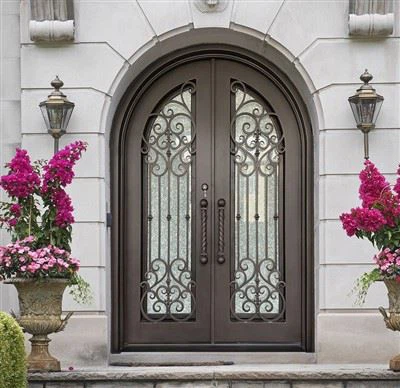
When it comes to choosing doors for your home or business, the options of iron doors and steel copper doors each have their own characteristics, and understanding the differences between them can help you make an informed decision based on your specific needs and preferences.
1. Material Composition and Properties
Iron Doors
Iron is a relatively pure metal with distinct properties. It has good strength and is known for its ability to be forged into various intricate shapes. However, iron is highly susceptible to rust and corrosion when exposed to moisture and oxygen in the air. Without proper protection, such as regular painting or applying rust - inhibiting coatings, an iron door can quickly develop rust spots, which not only affect its appearance but also weaken its structural integrity over time.
Steel Copper Doors
Steel is an alloy primarily composed of iron and carbon, which gives it enhanced strength, durability, and resistance to deformation compared to pure iron. The addition of other elements during the manufacturing process can further improve its properties, such as increasing its resistance to corrosion. Copper, when incorporated with steel, brings its own unique set of attributes. Copper is known for its natural beauty, with a warm, reddish - brown hue that develops an attractive patina over time. It also has some corrosion - resistant properties. Steel copper doors combine the strength of steel with the aesthetic appeal and certain protective qualities of copper, creating a material that offers a good balance of functionality and visual charm.
2. Appearance and Aesthetic Appeal
Iron Doors
Iron doors are often associated with a classic and timeless look. They can be crafted into elaborate designs, including ornate scrolls, floral patterns, and geometric shapes, through forging and welding techniques. The dark, metallic color of iron provides a sense of elegance and strength. Iron doors are commonly used in traditional or rustic architectural styles, where their solid and heavy - looking appearance complements the overall aesthetic. They can also be painted in various colors to match different decor themes, although the natural metallic finish is a popular choice for many.
Steel Copper Doors
Steel copper doors offer a more diverse range of aesthetic options. The steel base provides a sturdy foundation, while the copper elements add a touch of luxury and warmth. The copper can be used in different ways, such as inlaid patterns, accents, or as a complete overlay. The development of the copper patina over time gives the door a unique, aged appearance that is highly sought after in many design styles, from modern to vintage. Additionally, the combination of steel and copper can be customized to create a wide variety of looks, making steel copper doors suitable for a broader range of architectural and interior design schemes.
3. Durability and Maintenance
Iron Doors
As mentioned earlier, iron's vulnerability to rust is a significant factor affecting its durability. While proper maintenance, including regular cleaning, rust removal, and repainting, can extend the lifespan of an iron door, it requires more effort compared to some other materials. However, if well - maintained, an iron door can last for many years. The strength of iron makes it resistant to impacts and dents to a certain extent, but over time, repeated exposure to the elements can cause it to deteriorate.
Steel Copper Doors
Steel copper doors generally offer better durability due to the enhanced corrosion resistance of steel and the protective properties of copper. The steel provides a robust structure that can withstand heavy use and environmental stress, while the copper helps to prevent or slow down the corrosion process. Maintenance for steel copper doors is relatively less intensive. Regular cleaning to remove dirt and debris is usually sufficient, and the development of the copper patina is often considered a desirable feature rather than something to be prevented. This makes steel copper doors a more convenient choice for those who want a long - lasting door with minimal upkeep.
4. Cost
Iron Doors
Iron doors can vary in cost depending on the complexity of the design, size, and quality of the materials used. Generally, due to the relatively simple manufacturing process for basic iron doors and the availability of iron as a raw material, they can be more affordable compared to steel copper doors. However, if you opt for custom - designed, highly ornate iron doors with intricate forging work, the cost can increase significantly.
Steel Copper Doors
Steel copper doors are typically more expensive. The combination of steel and copper, along with the more complex manufacturing processes often required to integrate these two materials, contributes to the higher price.