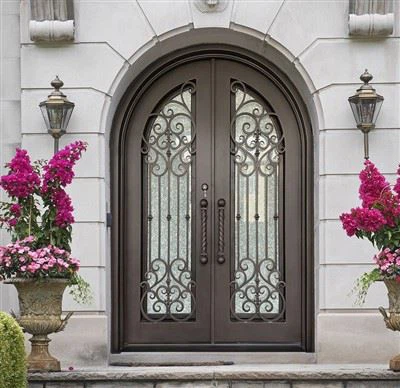
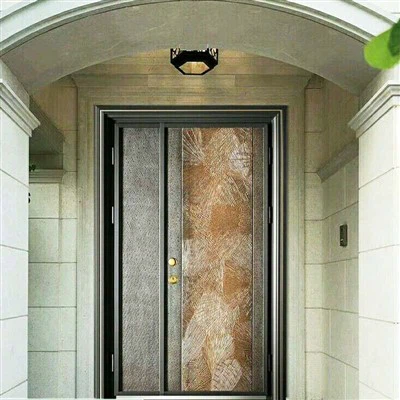
Wrought iron doors are popular for their durability and diverse styles, but long-term exposure to wind, sun, rain and other environments can easily cause rust and paint peeling. Proper daily maintenance can not only maintain the beauty of wrought iron doors, but also greatly extend their service life. Here are 5 key maintenance methods:
1. Clean regularly to prevent dirt accumulation
Reason: Dirt such as dust, mud, bird droppings, etc. adhere to the surface of wrought iron doors for a long time, which may accelerate corrosion or cause damage to the paint.
Method:
Soft cloth wiping: Wipe the door body with a soft dry cloth or sponge every week to remove floating dust.
Neutral detergent cleaning: Gently scrub with warm water + neutral detergent (such as dishwashing liquid) every month, and avoid using strong acid and alkali detergents.
Stubborn stain treatment: If there is rust or stubborn stains, use baking soda paste or special metal cleaner to clean it locally, and then rinse it with clean water.
Note: Be sure to wipe dry after cleaning to avoid rust caused by residual water stains.
2. Check and repair paint damage
Reason: The paint layer is the first anti-rust barrier of the wrought iron door. Once it peels off, the metal will be directly exposed to air and moisture, accelerating rust.
Method:
Regular inspection: Check the door body every quarter for paint peeling, scratches or bulging.
Partial paint touch-up: When a small area of paint peeling is found, first use sandpaper to polish the rust, apply anti-rust primer, and then spray or brush the same color topcoat.
Full renovation: If the paint surface peels off in a large area, it is recommended to ask a professional to spray the entire surface to ensure uniform coverage.
Tips: Choose outdoor special metal paint, which is more weather-resistant.
3. Focus on protecting hinges and locks
Reason: Hinges and locks are the moving parts of wrought iron doors. Long-term friction is prone to rust or jamming, affecting use.
Method:
Lubrication and maintenance: Add lubricating oil (such as WD-40) to hinges, lock cores and other parts every 3 months to ensure smooth opening and closing.
Rust prevention: If the screws or hinges are rusted, clean them with rust remover and apply anti-rust oil in time.
Replace damaged parts: If the lock or hinge is severely deformed, it is recommended to replace it to avoid affecting the stability of the door.
4. Moisture-proof and rust-proof, avoid long-term humid environment
Reason: Wrought iron doors are more likely to rust in humid environments, especially in rainy seasons or coastal areas.
Method:
Keep dry: Wipe the door body in time after rain to avoid water accumulation.
Drainage check: Ensure that the drainage around the door frame is unobstructed to prevent rainwater from silting.
Anti-rust coating: Anti-rust wax or transparent rust inhibitor can be applied to the hidden part of the door body (such as the bottom) to enhance protection.
Special circumstances: In coastal areas or high humidity environments, it is recommended to do professional anti-rust treatment once a year.
5. Avoid external impact and scratches with hard objects
Reason: Collisions or scratches will damage the paint and metal structure, causing local rust or deformation.
Method:
Install cushions: Install rubber cushions at the contact point between the door and the door frame to reduce the impact force.
Prune surrounding plants: Avoid branches, vines, etc. from scratching the door.
Educate family members/visitors: Open and close the door gently, and avoid hitting the door with hard objects (such as keys).